%20(1).png?width=200&height=200&name=Untitled%20(200%20x%20200%20px)%20(1).png)
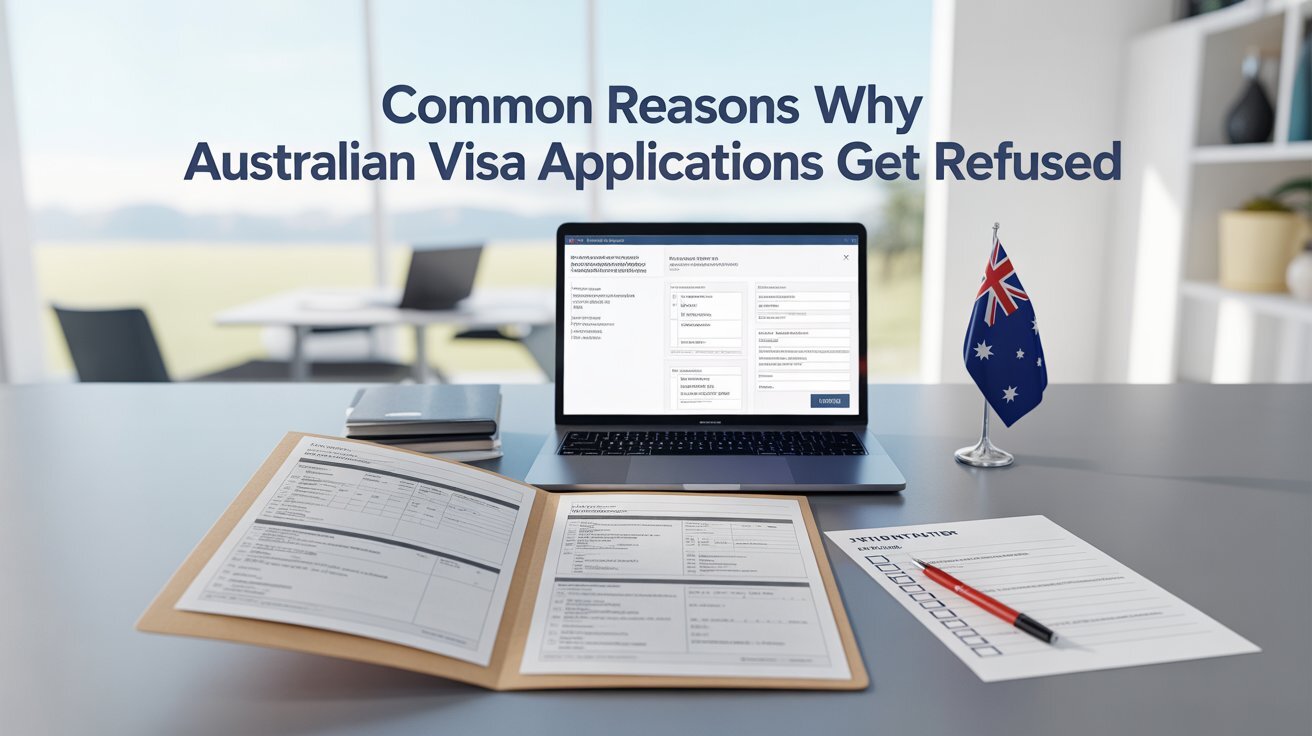
You've spent months preparing. Documents gathered. Fees paid. Application submitted. Then the email arrives: "We regret to inform you..."
Visa refusals devastate plans, and according to the Department of Home Affairs, over 30,000 visa applications were refused last year. But here's the reality most people miss: the majority of refusals are preventable. They're not about eligibility, they're about execution.
This guide reveals the most common reasons Australian visas get refused in 2026, and exactly what you need to do differently.
1. Incomplete or Inconsistent Information (PIC 4020 Violations)
The Problem: The Public Interest Criterion (PIC) 4020 allows the Department to refuse applications containing false, misleading, or inconsistent information, even if it was unintentional. This includes:
- Incorrect personal details (misspelt names, wrong dates of birth, passport number errors)
- Discrepancies between current and previous applications
- Missing documents or incomplete forms
- Conflicting information across different sections of your application
How to Avoid: Triple-check every field. Use the official document checklist tool. Ensure all translations are certified, and dates match across documents. Review your entire application before submission, one inconsistency can trigger refusal.
2. Failure to Meet Genuine Temporary Entrant (GTE) Requirement
The Problem: For visitor, student, and temporary work visas, the Department must be satisfied that you intend to leave Australia when your visa expires. If they believe you'll overstay, work illegally, or seek alternative pathways, your application will be refused on GTE grounds. Red flags include:
- Weak employment ties (newly employed, unstable work, or no job at all)
- Limited family or property connections in your home country
- Proposing a long stay with insufficient income or savings
- Immigration history showing extended overseas stays
- Unclear or vague travel purpose
How to Avoid: Provide employment letters showing leave approval, payslips with matching bank credits, property deeds or leases, family ties documentation, and a realistic itinerary matching your stated purpose and financial capacity.
3. Insufficient Financial Evidence
The Problem: The Department scrutinises financial documents to ensure you can support yourself without working illegally or burdening Australia's welfare system. Common issues include:
- Large, unexplained deposits shortly before application (signals 'show money')
- Low balances that don't match stated income or travel expenses
- Inconsistent bank statement patterns
- Missing source documentation for funds
- For students: not meeting the minimum AUD 29,710/year living cost requirement plus tuition
How to Avoid: Show consistent financial history for 3-6 months. Include payslips, tax returns, business records, and property valuations. If someone else is funding your trip, provide a statutory declaration from them with proof of their financial capacity and relationship to you.
4. Character Concerns (Section 501 Issues)
The Problem: Australia enforces strict character requirements under Section 501 of the Migration Act. You may fail the character test if you have:
- A substantial criminal record or any conviction resulting in imprisonment
- Been convicted of sexually-based offences involving children
- Been found guilty of escaping immigration detention
- Had associations with criminal organisations
- Failed to disclose previous offences, even minor ones
Critical: Non-disclosure is worse than the offence itself. The Department treats concealment as deception, leading to automatic refusal and potential 3-10 year bans. Always provide police clearance certificates from every country you've lived in for 12+ months over the past decade.
5. Health Requirement Failures
The Problem: The Department assesses whether your medical condition might:
- Pose a public health risk (e.g., active tuberculosis)
- Result in high costs to Australia's healthcare system
- Prejudiced access to health services for Australian citizens
Conditions like HIV, hepatitis, or those requiring extensive long-term care can lead to refusal. Importantly: Having private health insurance doesn't override health requirements, the Medical Officer of the Commonwealth assesses based on what a hypothetical person with your condition would need, not your personal circumstances.
How to Avoid: Complete all requested health examinations promptly. For student visas, ensure you have valid Overseas Student Health Cover (OSHC) for the entire visa duration. For visitors, obtain appropriate Overseas Visitors Health Cover (OVHC).
6. Unverifiable or Fraudulent Documents
The Problem: Case officers verify every document. If anything looks edited, inconsistent, or unofficial, it raises immediate red flags. Common issues:
- Edited or cropped bank statements
- Fabricated employment letters lacking official headers, stamps, or verifiable contact details
- Screenshots instead of proper PDF downloads
- Uncertified translations
- Documents are missing notarization when required
How to Avoid: Submit only original, unaltered documents. Use certified translations from NAATI-accredited translators. Ensure that all employment letters include the employer's contact details, official letterhead, and specific job duties. Bank statements must show official bank logos and be downloaded directly from your bank.
7. Failure to Respond to Information Requests
The Problem: The Department issues Requests for Further Information (RFIs) when something is unclear or missing. You typically have 28 days to respond. Failing to provide the requested documents or clarification by the deadline results in automatic refusal.
How to Avoid: Monitor your email (including spam folders) daily after lodging. If delays occur (e.g., waiting for medical appointments), communicate proactively with your case officer before the deadline expires. Silence equals refusal.
What to Do If Your Visa Is Refused
A refusal isn't necessarily final. Your options depend on your circumstances:
- Appeal to the Administrative Review Tribunal (ART): If you were onshore when refused, you typically have 21 days to lodge an appeal. Offshore refusals generally have no appeal rights.
- Reapply: Address all refusal reasons explicitly in a new application. Don't ignore previous refusals, case officers will see your history.
- Seek Ministerial Intervention: Last resort for compelling or compassionate circumstances. Success rates are low but possible.
Critical: If refused onshore, apply for a Bridging Visa immediately to maintain lawful status while you appeal. Leaving Australia may void your review rights.
The Bottom Line
Most visa refusals are preventable. They're rarely about eligibility, they're about attention to detail, honest disclosure, and providing evidence that leaves no room for doubt. The Department of Home Affairs uses a 'balance of probabilities' test: if your evidence doesn't clearly prove your claims, they must refuse.
The stakes are high. Visa application fees are non-refundable. Refusals create a negative immigration history that follows you to future applications, not just for Australia, but potentially other countries. Get it right the first time.
For comprehensive visa requirements and up-to-date processing information, visit the Department of Home Affairs visa finder and review the Migration Act 1958.
Don't Leave Your Application to Chance
At Migration Star, our registered migration agents have seen every refusal reason, and know exactly how to prevent them. We review your application with forensic attention to detail, identify red flags before submission, and ensure every document meets Department standards. Contact us today for a professional application review and stop visa refusals before they happen.